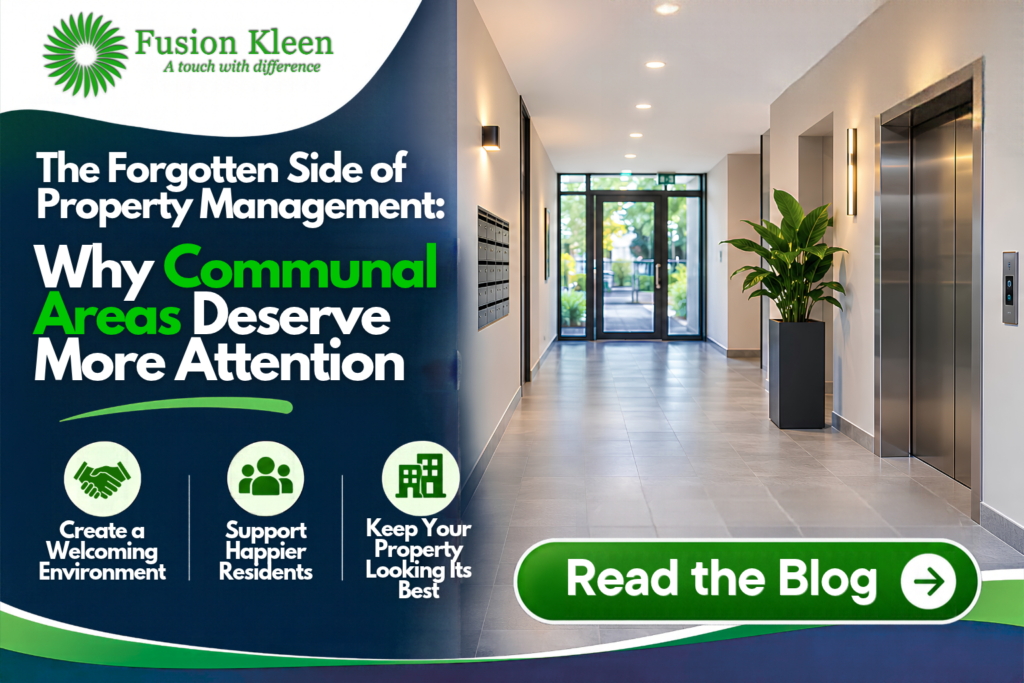
The Forgotten Side of Property Management: Why Communal Areas Deserve More Attention
When people think about property maintenance, their attention often goes straight to individual apartments, offices, kitchens and bathrooms. These are the spaces that receive the most attention because they are directly occupied, regularly used and easy to associate with cleanliness.
But what about the spaces in between?
The entrance where residents collect their post. The hallway visitors walk through before reaching an apartment. The staircase used by dozens of people every day. The lift that carries residents, deliveries and maintenance contractors between floors.
These shared spaces are an important part of a property’s overall environment, yet they can easily become an overlooked part of routine maintenance.
For property managers, landlords, letting agents and building management companies, communal area cleaning should be considered an essential part of looking after a building.
A property is not experienced one room at a time. People experience the entire journey through it, from the moment they enter to the moment they reach their destination. And that journey deserves attention.
1. First Impressions Begin at the Entrance
A building’s entrance is often the first physical interaction a visitor, prospective tenant or resident has with the property. Before anyone sees an apartment or steps into an office, they have already formed an impression based on the condition of the entrance.
Dirty flooring, dusty surfaces, overflowing bins, fingerprints on glass doors and unpleasant odours can make a building feel neglected.
On the other hand, a clean and well-maintained entrance creates a more welcoming atmosphere. It communicates that the property is being looked after and that attention is paid to the shared environment.
This is particularly important for:
- Residential apartment blocks.
- Managed rental properties.
- Office buildings.
- Mixed-use developments.
- Commercial premises with shared entrances.
For landlords and property managers, maintaining these areas can contribute to the overall presentation of a building and the experience of the people who use it.
2. Communal Areas Experience More Traffic Than You Think
One reason shared spaces need regular attention is the volume of activity they experience.
Unlike individual rooms, which may be occupied by one household or a small team, shared areas are used by multiple people throughout the day.
Residents, visitors, delivery drivers, contractors, maintenance staff and cleaners all move through these spaces. This creates a constant cycle of dirt and general wear.
Some common examples include:
Entrances and reception areas: Foot traffic brings in dust, mud, moisture and debris, particularly during wet weather.
Hallways and corridors: These collect dust, marks, footprints and debris from everyday movement.
Staircases: Steps, handrails, corners and skirting boards can accumulate dirt that is easy to overlook.
Lifts: Buttons, doors, mirrors and flooring are frequently touched and used throughout the day.
Shared kitchens and break areas: These can quickly become untidy through food preparation, spills and everyday use.
A cleaning routine that only focuses on visible floors may miss many of these details.
Effective communal cleaning should consider how each area is used, how frequently it becomes dirty and which surfaces require regular attention.
3. The Small Details Make a Big Difference
A communal area can look reasonably clean from a distance while still having several neglected details.
Think about fingerprints around lift buttons, dust along skirting boards, marks on glass doors, cobwebs in ceiling corners or dirt accumulating around the edges of staircases.
These details may seem minor individually, but together they influence how well-maintained a building feels.
A practical communal cleaning routine should include more than sweeping and mopping. Depending on the property and agreed cleaning scope, attention may be needed for:
- Vacuuming and cleaning floors.
- Wiping accessible surfaces and touchpoints.
- Cleaning entrance doors and internal glass.
- Dusting skirting boards and accessible ledges.
- Cleaning staircases and handrails.
- Wiping lift doors, buttons and mirrors.
- Emptying communal bins where included in the service.
- Removing visible cobwebs from accessible areas.
- Cleaning shared kitchens and washrooms where applicable.
The exact requirements will vary depending on the building.
The important thing is to establish a clear cleaning schedule so that less obvious areas are not continually overlooked.
4. Why Inconsistent Cleaning Creates Problems for Property Managers
Managing a property already involves balancing several responsibilities.
From responding to maintenance requests and coordinating contractors to handling tenant enquiries and arranging inspections, property managers have plenty to manage.
When communal cleaning is inconsistent, it can become another recurring source of complaints.
Residents may report dirty hallways, unpleasant smells, overflowing bins or shared spaces that appear neglected. Visitors may question the standard of maintenance, while prospective tenants may form an unfavourable impression during viewings.
Without a structured cleaning arrangement, property managers can find themselves reacting to problems instead of preventing them.
A consistent cleaning schedule helps create a more organised approach. It allows cleaning requirements to be agreed in advance, responsibilities to be clearer and recurring tasks to be managed more effectively.
Rather than waiting until a communal area becomes visibly dirty, property managers can establish a routine based on the building’s occupancy, layout and level of use.
5. Different Buildings Need Different Cleaning Schedules
There is no universal cleaning schedule that works for every property.
A small residential block with a few apartments will have different requirements from a large development with several entrances, multiple staircases and shared facilities.
Similarly, an office building with daily staff and visitor traffic may need a different approach from a commercial property used only during certain hours.
When planning communal area cleaning, property managers should consider:
Occupancy: How many people regularly use the building?
Foot traffic: Are entrances, corridors and staircases used throughout the day?
Property layout: How many floors, lifts, shared facilities and access points need attention?
Seasonal conditions: Does wet weather bring additional mud, moisture and debris into the building?
Shared facilities: Are there communal kitchens, washrooms, reception areas or other spaces that need cleaning?
Presentation requirements: Does the building need to maintain a particular standard for residents, visitors or prospective tenants?
For some properties, cleaning several times a week may be appropriate. Others may benefit from daily attention in high-traffic areas, alongside less frequent detailed cleaning.
The best arrangement is one that reflects the actual needs of the building rather than relying on a generic checklist.
6. What Should Property Managers Look for in a Communal Cleaning Company?
Choosing a cleaning provider is about more than finding someone who can vacuum a hallway or mop a staircase.
Property managers need a service that understands the importance of consistency, communication and clearly defined responsibilities.
Before appointing a communal cleaning company, consider the following:
A clear cleaning scope: Make sure everyone understands which areas are included, what tasks will be completed and how frequently they will be carried out.
A suitable schedule: Cleaning should be arranged around the building’s activity and access requirements.
Attention to detail: Ask how the provider approaches frequently overlooked areas such as handrails, lift interiors, skirting boards and entrance glass.
Communication: There should be a straightforward way to raise concerns, report missed tasks and discuss changing requirements.
Flexibility: Building needs can change. A cleaning arrangement should be capable of being reviewed when occupancy, usage or maintenance requirements change.
Professional standards: Look for a provider that takes its responsibilities seriously and understands the importance of working in shared residential and commercial environments.
A well-defined arrangement helps avoid misunderstandings and gives property managers a clearer picture of what to expect.
7. Communal Cleaning Is Part of Long-Term Property Care
Clean communal spaces are not simply about appearances.
Regular attention to shared areas helps prevent dirt and debris from accumulating, supports a more pleasant environment and allows potential maintenance issues to become easier to notice.
For example, a routine cleaning visit may reveal a persistent spill, an unusual odour, damaged flooring or a recurring problem around an entrance.
Cleaning teams are not substitutes for maintenance professionals, but regular cleaning can help make visible changes in the condition of shared spaces easier to identify and report.
It is also worth remembering that residents and visitors use these areas every day. A clean, orderly environment can make everyday movement through a building more pleasant.
For property owners and managers, this is an important part of maintaining a property that people feel comfortable using.
Frequently Asked Questions About Communal Area Cleaning
What is communal area cleaning?
Communal area cleaning involves maintaining shared spaces within residential and commercial properties. These can include entrances, hallways, staircases, lifts, reception areas, shared kitchens and communal washrooms.
How often should communal areas be cleaned?
The frequency depends on the size of the property, the number of occupants and the amount of daily foot traffic. Some buildings may require daily cleaning, while smaller properties may need a few visits each week.
What is included in a communal cleaning service?
This depends on the agreed cleaning scope. Typical tasks can include floor cleaning, dusting, wiping accessible surfaces, cleaning entrance glass, maintaining staircases and cleaning shared facilities.
Who is responsible for communal area cleaning?
Responsibility generally sits with the property owner, landlord, managing agent or appointed building management company, depending on the property arrangements and applicable agreements.
Can communal areas be cleaned outside normal working hours?
Cleaning schedules can often be arranged around the needs of the property. Where available, out-of-hours cleaning may help minimise disruption to residents, employees and visitors.
Do communal areas need professional cleaning?
Professional cleaning can help property managers maintain a consistent routine, particularly in buildings with high foot traffic or several shared facilities. The appropriate arrangement depends on the property’s size and requirements.
Give Your Shared Spaces the Attention They Deserve
The condition of a building is reflected in more than its individual apartments, offices or commercial units. The shared spaces connecting them are just as important.
From welcoming entrances to clean corridors, staircases and communal facilities, every area contributes to the experience of the people who live, work and visit there.
At Fusion Kleen, we provide professional cleaning services for residential and commercial properties across London, Hertfordshire and Essex.
Whether you manage a residential building, oversee commercial premises or are responsible for maintaining shared facilities, we can discuss your cleaning requirements and help you identify an appropriate cleaning arrangement.
Don’t let the spaces everyone uses become the spaces everyone overlooks.
Get in touch with Fusion Kleen to discuss your communal cleaning requirements.