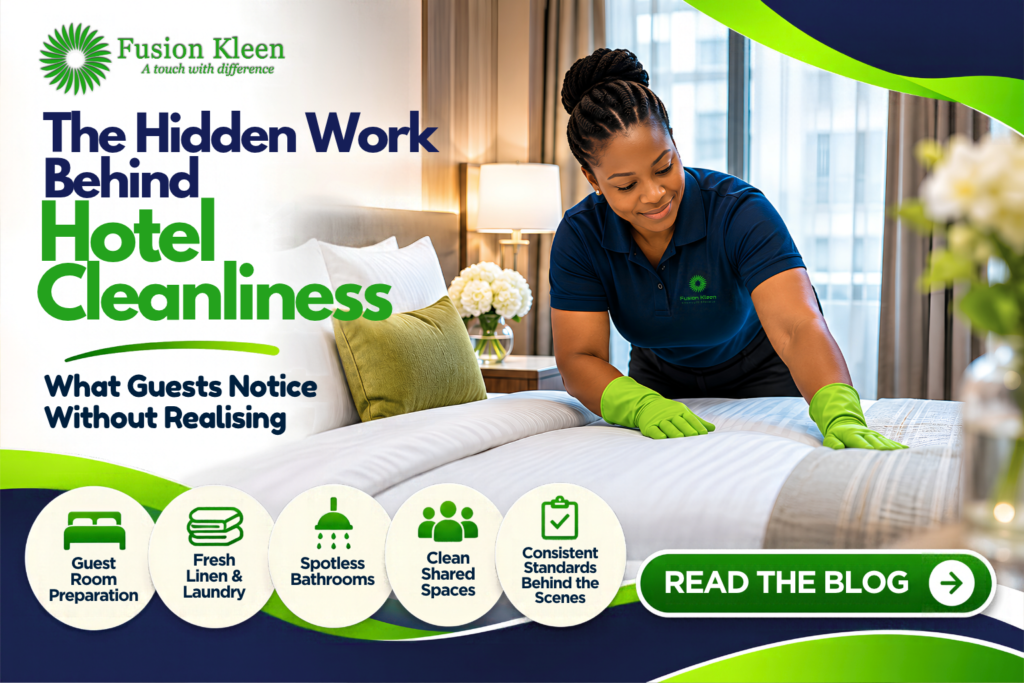
The Hidden Work Behind Hotel Cleanliness: What Guests Notice Without Realising
A Guest May Never See the Work. They Should Feel the Difference.
A guest opens the door to their hotel room after a long journey. The bed is neatly prepared. The bathroom feels fresh. The surfaces are clear, the floor is clean and the room has a calm, welcoming atmosphere.
Everything seems to be exactly where it should be.
What the guest does not see is the work that made that moment possible: the room inspection, the linen change, the bathroom details, the careful cleaning of touchpoints, the checks in shared areas and the coordination required to have everything ready on time.
Hotel cleanliness is often judged by what guests can see, but a consistently clean hospitality environment depends on much more than a quick visual tidy. It is a sequence of practical tasks, routines and checks that help every part of the property feel cared for.
For hotel owners, accommodation managers and hospitality operators, understanding these details is essential. Guests may not notice every task when it is done well, but they are more likely to notice when something has been missed.
The Guest Room: Where the Standard Becomes Personal
A hotel room is a guest’s private space for the duration of their stay. It is where they rest, get ready, work, unpack and spend time away from home.
Its condition has a direct influence on how comfortable the stay feels.
Preparing a room involves more than straightening the duvet and emptying the bin. A thorough room-cleaning routine should consider:
- The condition of the bed and linen.
- Accessible furniture surfaces.
- Floors and carpets.
- Mirrors and glass surfaces.
- Waste bins.
- Areas guests are likely to use.
Attention should also be given to the details that can make a room feel unfinished: dust on bedside tables, fingerprints on mirrors, marks on door handles, crumbs around furniture or overlooked corners.
A room may look tidy at first glance while still needing further attention.
The precise room checklist will depend on the hotel’s standards, room type and agreed cleaning scope. The important point is consistency: the same expectations should be understood and applied across the rooms being serviced.
Bathrooms: Small Details, Strong Impressions
Bathrooms are among the areas where guests quickly form an opinion about cleanliness.
Watermarks, residue, hair, unpleasant odours or an untidy presentation can undermine the impression created by an otherwise well-prepared room.
A considered bathroom routine should include:
- Toilets, sinks and taps.
- Baths or showers.
- Mirrors and accessible surfaces.
- Floors.
- Shower screens, fittings and edges.
- Fresh towels and agreed guest amenities.
Bins should be emptied, and any dispensers or supplies included in the hotel’s standard should be checked and replenished as required.
Bathrooms also need appropriate ventilation and prompt reporting of maintenance concerns.
A leaking tap, damaged seal or persistent drainage issue is not simply a cleaning task; it may require attention from the property’s maintenance team.
Linen and Laundry: The Work Behind a Well-Prepared Bed
Fresh bedding and towels are central to the feeling of a prepared hotel room.
Guests may not think about the process behind them, but the condition and presentation of linen are immediately noticeable.
Linen management involves a coordinated flow:
- Removing used items.
- Separating them appropriately.
- Arranging laundering.
- Checking clean items.
- Ensuring replacements are available when rooms need to be prepared.
For hospitality businesses with frequent room turnover, this process needs planning.
A shortage of clean towels or replacement bedding can delay room preparation, while unclear handling arrangements can create confusion between housekeeping and laundry teams.
Hotels should establish practical arrangements for linen quantities, collection points, storage, delivery and the handling of stained or damaged items.
If laundry is outsourced, responsibilities and turnaround expectations should be clearly agreed.
The objective is simple: clean linen should be available when it is needed, and used linen should move through an organised process rather than becoming a last-minute problem.
The Areas Guests Walk Through Matter Too
Guests do not experience a hotel room in isolation.
They pass through entrances, reception areas, corridors, lifts, stairways, lounges and other shared spaces. These areas form part of the overall impression of the property.
A beautifully prepared room can feel disconnected from the rest of the hotel if the corridor outside is dusty, the lift has visible marks or the reception floor is untidy.
Shared spaces need their own cleaning routines, shaped by how frequently they are used.
High-traffic entrances may need more frequent attention because of outdoor dirt and changing weather.
Reception counters, seating, lift buttons, handrails and other frequently touched surfaces should be included in suitable cleaning schedules.
The right approach is to look at the guest journey through the building.
Which spaces will visitors use? Where do people gather? Which surfaces receive the most contact?
Thinking through these questions helps managers identify areas that might otherwise be overlooked.
The Details Guests May Not Mention but Still Notice
Some cleaning details do not stand out individually, yet they contribute to the overall feeling of a well-maintained property.
These may include:
- Clear mirrors and clean glass.
- Tidy skirting boards.
- Dust-free accessible surfaces.
- Clean door handles.
- Presentable bins.
- Floors appropriate for the type of space.
Odours also matter. A room should feel fresh without relying on strong fragrance to disguise an underlying issue.
It is useful to distinguish between cleanliness and presentation.
A space may have been cleaned but still look disorganised if furniture is out of place, towels are poorly arranged or shared items have not been returned to their designated positions.
A consistent finishing check can help identify these small issues before a guest encounters them.
It should be based on the hotel’s own standards and the agreed scope of work, rather than assumptions about what every property requires.
Why Timing and Coordination Are Part of Hotel Cleaning
Hospitality cleaning operates around the movement of guests.
Rooms may need to be prepared between checkout and check-in, while shared spaces remain in use throughout the day.
Cleaning teams therefore need to work around occupancy, access, hotel operations and agreed priorities.
A delay in one part of the process can affect another.
If a room is not released for cleaning on time, preparation may be compressed. If linen is unavailable, bed making may be held up. If a maintenance issue is discovered, the relevant team may need to assess whether the room can be returned to service.
Clear communication between housekeeping, reception, management, maintenance and laundry functions helps reduce avoidable confusion.
Teams should understand:
- How room status is communicated.
- How urgent issues are reported.
- Who is responsible for deciding when a room is ready.
Cleaning schedules should be realistic for the size and layout of the property, the number of rooms, occupancy patterns and the tasks included.
A plan that looks good on paper but does not reflect daily operations will be difficult to maintain.
A Cleaning Plan Should Reflect the Type of Hospitality Property
Not every hospitality property has the same needs.
A boutique hotel, a serviced apartment building, a guest house and a larger hotel may have different room layouts, shared facilities, occupancy patterns and service expectations.
The cleaning arrangement should reflect those differences.
Managers can begin by identifying:
- The areas included in the cleaning scope.
- The frequency required.
- Access arrangements.
- Priority tasks.
- Materials or surfaces that need particular care.
It is also worth agreeing how additional requests, unexpected spills, guest-related incidents and maintenance concerns will be communicated.
A clear scope helps everyone understand what is included and where another team or specialist may need to become involved.
Reviewing the arrangement periodically is useful too.
Occupancy may change, a property may add facilities or guest feedback may highlight an area that needs more attention.
The cleaning plan should be capable of being reviewed as the operation evolves.
What Should Hospitality Operators Look for in a Cleaning Partner?
Choosing a cleaning provider is about finding a service that understands the property’s requirements and can work within its operating arrangements.
Before agreeing a service, hospitality operators may want to discuss:
- Which rooms and shared areas are included in the agreed scope?
- How will cleaning tasks and visit schedules fit around guest activity?
- How will linen and laundry responsibilities be handled, if included?
- How will access, keys and restricted areas be managed?
- How should urgent issues, damage or maintenance concerns be reported?
- What arrangements apply when occupancy or operational requirements change?
It is important to confirm the details rather than assume every cleaning company offers the same hospitality services.
Linen handling, laundry, room turnaround and replenishment of guest supplies should only be included where they have been specifically agreed.
The Best Hotel Cleaning Is Often the Work Guests Never Have to Think About
A comfortable hospitality experience is built from many details working together.
Guest rooms need to be prepared carefully, bathrooms need attention, linen needs to be ready, and shared spaces need to feel consistently maintained.
Behind all of this is the planning and communication that allow the work to happen at the right time.
Guests may not see the checklists, schedules or coordination behind a clean hotel. They simply experience a room that feels ready and a property that appears cared for.
When something is overlooked, however, it can become part of the story they remember.
For hospitality operators, the opportunity is to treat cleaning as an essential part of the guest experience, not an afterthought to be squeezed in around everything else.
Discuss Hospitality Cleaning with Fusion Kleen
A well-maintained accommodation environment takes planning, attention to detail and a clear understanding of how the property operates.
Fusion Kleen Ltd provides professional cleaning solutions for residential and commercial properties across Welwyn Garden City, London, Hertfordshire and Essex.
If you manage a hotel, guest accommodation or serviced property and would like to discuss your cleaning requirements, our team can talk through the areas that need attention and the type of arrangement you are looking for.
Any specific requirements for room preparation, linen handling, laundry or scheduled support can be discussed as part of defining the scope of service.
Give every guest a space that feels ready to welcome them.
Contact Fusion Kleen to discuss your hospitality cleaning requirements.