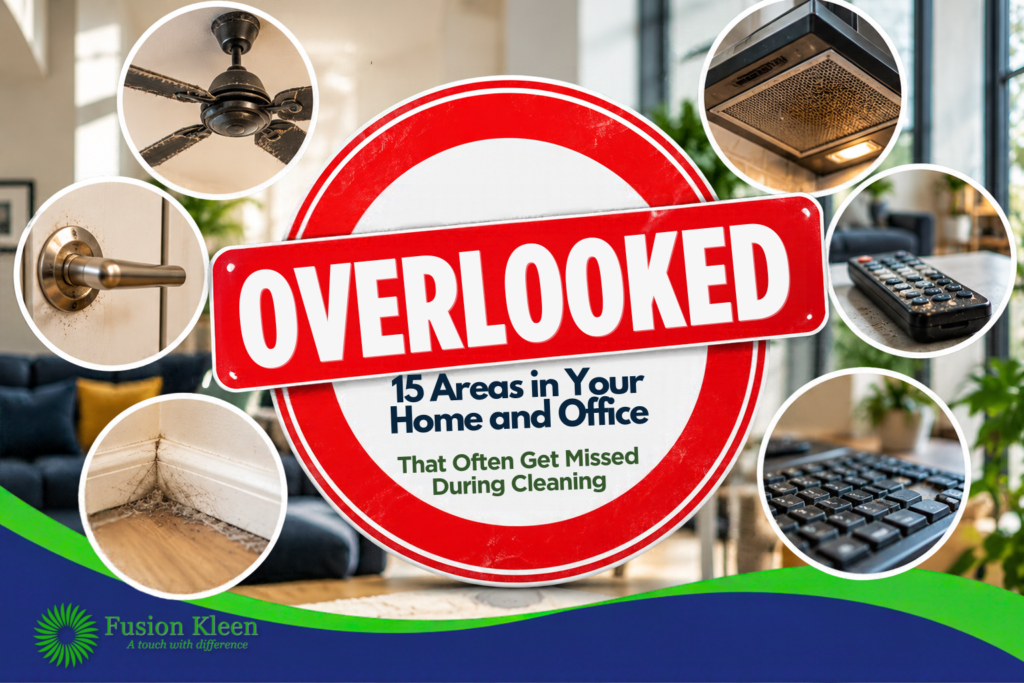
15 Overlooked Areas in Your Home and Office That Need Cleaning
Even when a room looks tidy, small areas can be missed during routine cleaning. Dust, fingerprints, grease and everyday grime often build up along edges, handles and places that are not immediately visible.
These areas may not need attention every day, but including them in a planned routine can make cleaning more thorough.
The aim is not to create an endless list of chores. It is to notice the details that make a real difference to how a space looks and feels.
Here are 15 commonly overlooked areas to clean in your home or workplace, along with practical tips for keeping them fresh and presentable.
1. Skirting Boards
Skirting boards collect dust along the edges of rooms, particularly behind furniture and near entrances.
Use a suitable cloth or vacuum attachment, then spot-clean marks with a product that is safe for the finish.
Avoid soaking painted or wooden surfaces, and test unfamiliar products in a hidden area first.
2. Door Frames and Upper Edges
The tops of door frames can hold dust that is easy to overlook because it is above eye level.
Wipe accessible areas with a suitable cloth and work carefully so dust does not fall onto freshly cleaned surfaces.
Do not climb onto unstable furniture to reach high spots. Use appropriate equipment or seek help.
3. Window Ledges and Frames
Window ledges can collect dust, insects and outdoor dirt.
Wipe the ledge and accessible frame, and look for recurring condensation or signs of water ingress.
Cleaning can improve appearance, but persistent moisture or mould may require investigation of the underlying cause.
4. Light Switches
Light switches are handled throughout the day, so they can show fingerprints and grime.
Use a lightly dampened cloth or a product suitable for the surface. Never spray liquid directly onto electrical fittings.
Follow product instructions and ensure the cloth is not wet enough to allow liquid to enter the switch.
5. Door Handles
Handles are frequently touched by household members, visitors and staff.
Clean them according to the material and product instructions, particularly in shared spaces.
Avoid assuming that every finish tolerates the same cleaning chemical. Some products can dull or damage protective coatings.
6. Appliance Sides
The sides of refrigerators, cookers and washing machines can collect dust, grease or splashes, especially where appliances sit close to cupboards.
Clean only accessible areas and follow the manufacturer’s guidance.
Do not pull heavy appliances out alone or disturb gas, water or electrical connections to reach behind them.
7. Cabinet Handles
Kitchen and bathroom cabinet handles often accumulate fingerprints and product residue.
Wipe them during routine surface cleaning and use a suitable product for the finish.
A quick pass around each handle and its surrounding area can make cupboards look fresher without requiring the entire cabinet to be deep cleaned every time.
8. Splashback Edges
Grease and food splashes may collect where a kitchen splashback meets a worktop or cupboard.
Use a cleaner suitable for the material and pay attention to corners and seams.
Avoid abrasive pads on surfaces that can scratch, and dry the area if the manufacturer’s guidance recommends it.
9. Kitchen Kickboards
The lower panels beneath cupboards can collect dust, crumbs and marks from shoes or mops.
Wipe them when cleaning the floor, using a method appropriate for the material.
If the area is greasy, choose a suitable product and avoid leaving moisture around exposed edges.
10. Bin Lids and Surrounding Floors
The bin itself is not the only area to consider. Lids, handles and the floor around the bin can collect residue and spills.
Empty bins regularly, clean the container as appropriate and let it dry before adding a fresh liner.
Use gloves when handling waste and wash your hands afterwards.
11. Shower Edges and Screens
Soap residue and water marks can collect around shower screen edges, door tracks and seals.
Use products suitable for the material and follow ventilation instructions.
If sealant is damaged or mould repeatedly returns, cleaning may not be enough. The area may need maintenance or specialist advice.
12. Around Tap Bases
Water marks and residue can accumulate where taps meet sinks or worktops.
Use a soft cloth and a product compatible with the finish.
Avoid harsh abrasives on plated or delicate surfaces, and dry the area when appropriate to reduce visible water marks.
13. Behind and Around the Toilet
Accessible areas around the toilet base and nearby floor can be missed during a quick bathroom clean.
Use dedicated cleaning cloths and tools for this area, and keep them separate from those used on kitchen surfaces.
Follow product instructions and wash your hands thoroughly after cleaning.
14. Meeting Tables and Chair Arms
In offices, meeting tables, chair arms and shared desks are touched by many people.
Include them in the workplace cleaning schedule and use products suitable for the surface.
For electronic equipment, follow the manufacturer’s instructions and avoid spraying liquid directly onto keyboards, screens or controls.
15. Shared Office Kitchen Touchpoints
Cupboard handles, refrigerator handles, appliance buttons and taps can be used repeatedly throughout the day.
Keep the shared kitchen tidy, deal with spills promptly and agree who is responsible for routine cleaning.
A simple schedule can prevent small tasks from being overlooked or assumed to be someone else’s responsibility.
How to Create a Realistic Cleaning Checklist
You do not need to clean all 15 areas every day.
Keep frequently touched surfaces in your regular routine, then rotate less frequently missed areas across the week or month.
The right frequency depends on:
- The number of people using the space.
- The type of activity taking place.
- How quickly dirt and grime build up.
- Whether the area is frequently touched.
- The materials and cleaning requirements of each surface.
A checklist can be divided by room or by frequency, whichever is easier to follow.
Review it occasionally and remove unnecessary tasks while adding areas that your property needs.
Use Cleaning Products and Equipment Safely
Choose products that are suitable for each surface and always follow the label instructions.
Keep these safety points in mind:
- Never mix cleaning chemicals.
- Never spray liquids directly onto electrical equipment.
- Use appropriate ventilation and protective equipment where required.
- Check product compatibility with delicate surfaces.
- Do not risk a fall when cleaning difficult-to-reach areas.
Cleaning should improve the space without creating a new hazard.
When Professional Cleaning Can Help
A professional cleaning service may be useful when a property needs a more thorough reset or regular cleaning tasks are difficult to keep up with.
Fusion Kleen provides cleaning services for homes and businesses across Hertfordshire, London and Essex.
Whether you need help with deep cleaning, regular cleaning, carpet cleaning or other available services, visit the Fusion Kleen website to explore your options and discuss the areas that matter most for your property.
Final Thoughts
A more complete clean often comes down to noticing the small details.
Keep a simple checklist, focus on the areas that matter most and spread less frequent tasks across your routine.
Consistency is usually more practical than trying to tackle every overlooked spot in one session.
By paying attention to these 15 often-forgotten areas, you can maintain a cleaner, fresher and more presentable home or workplace.
Frequently Asked Questions
1. What areas are most commonly missed during cleaning?
Often-missed spots include skirting boards, door frames, light switches, handles, window ledges, appliance sides, bin lids, tap bases and the edges around bathroom fixtures.
2. How often should I clean high-touch surfaces?
Clean and disinfect high-touch surfaces as appropriate for the space, how often they are used and the product instructions. Workplaces may need a routine based on their activities and risk assessment.
3. What is the best way to clean light switches and handles?
Follow the manufacturer’s guidance, use a suitable cloth and product, and avoid spraying liquid directly onto electrical fittings. Make sure surfaces are not left excessively wet.
4. How can I remember overlooked cleaning tasks?
Keep a short checklist and rotate less frequent jobs across the week or month. A written schedule helps spread the workload rather than leaving everything for one large clean.
5. When should I ask a professional cleaner for help?
Professional support may be useful for a deeper reset, hard-to-reach areas or tasks that are difficult to fit into your routine. Do not climb or use unsafe equipment to reach high areas.