Have you ever cleaned a space thoroughly, only to find that a few days later it somehow doesn’t look quite as clean?
The floors have lost their freshness. Dust has started appearing again. The windows have fingerprints. It’s right there with the obvious evidence that certain areas seem to get overlooked, while others have been receiving or have received plenty of attention.
It can be tempting to think the answer is simple: clean more often, use better products, or spend more time cleaning.
But sometimes, the secret to more consistent cleaning is much simpler than we think. It isn’t necessarily about using more products.
It isn’t always about spending more hours cleaning.
And it certainly isn’t about making someone work harder every time.
Very often, consistency comes down to something much more fundamental:
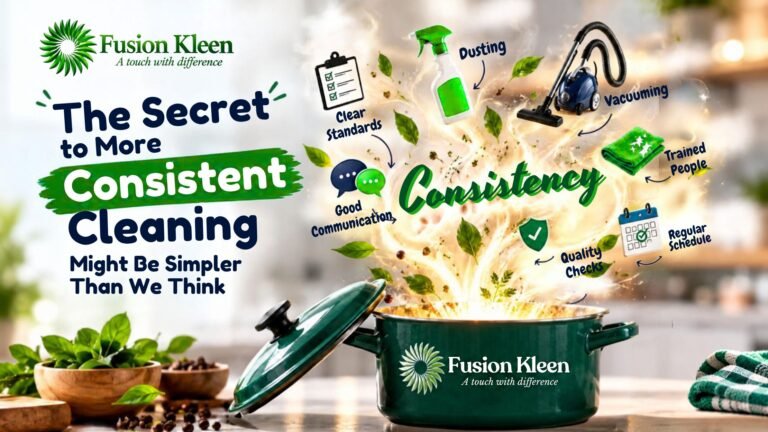
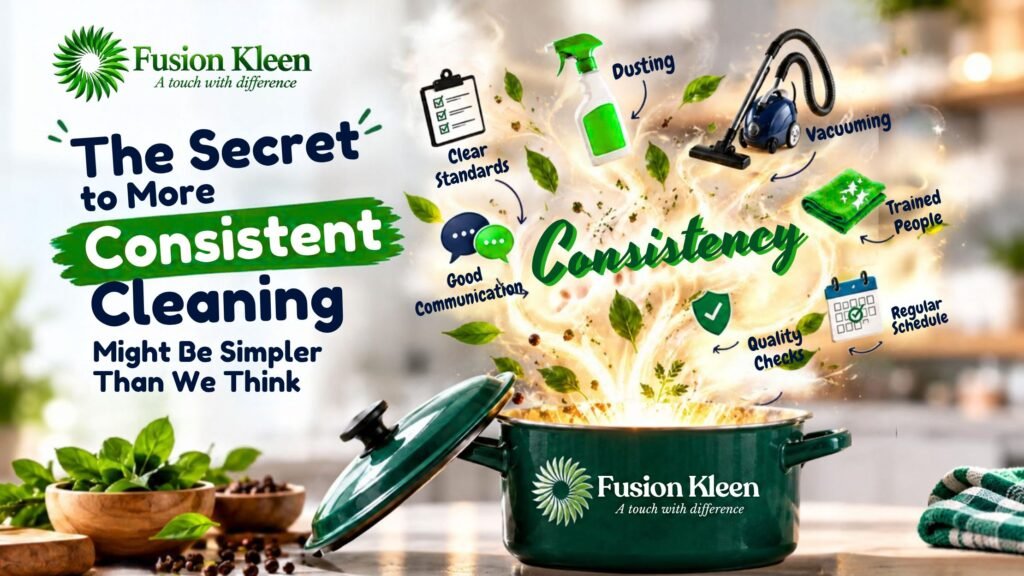
Having a clear system, clear routine, clear standards and the right people consistently following them.
Why Does Cleaning Become Inconsistent?
Cleaning sounds straightforward until you actually have to maintain the same standard repeatedly.
A one-off deep clean is very different from keeping a property consistently clean week after week.
During a one-off clean, the objective is obvious: make the space look and feel as clean as possible.
Regular cleaning is different.
You have to decide:
- What needs to be cleaned every visit?
- What needs to be cleaned weekly or periodically?
- Which areas need additional attention?
- What standard should each area meet?
- Who is responsible for each task?
- How do you know whether the job has actually been completed properly?
- What happens when the needs of the property change?
Without answers to these questions, cleaning can become dependent on memory, individual habits or whoever happens to be doing the job that day.
And that is where inconsistency can begin.
The Secret Isn’t Cleaning More. It’s Cleaning With a System.
A good cleaning system or structure doesn’t have to be complicated.
In fact, the best systems are often simple enough for people to follow consistently. A system might define:
What gets cleaned?
Different rooms and surfaces require different levels of attention.
How often should it get cleaned?
Not every task needs to happen every day, but some tasks should never be forgotten.
Who is responsible?
Clear responsibilities reduce the chance of important areas being missed.
What does “clean” actually mean?
A standard gives everyone the same reference point.
How is the work checked?
Quality control helps identify problems before they become recurring problems.
This is particularly important in professional cleaning, where the client expects a consistent result rather than a different standard every time someone enters the building.
Professional cleaning organisations and industry guidance also place emphasis on structured schedules, training, checklists and quality control as part of maintaining cleaning processes. (BICSc)
Consistency Starts With Clear Standards
One of the biggest challenges with cleaning is that “clean” can mean different things to different people.
For one person, a quick vacuum and empty bin might mean a room is clean. For another, clean might mean:
- No visible dust
- Clean touchpoints
- Streak-free surfaces
- Clean floors
- Fresh looking communal areas
- Tidy and hygienic washrooms
- No obvious build up around high use areas
Neither person necessarily has bad intentions.
They simply have different expectations.
That is why clear cleaning standards matter.
A cleaning standard gives everyone the same understanding of what the finished space should look like.
It also makes it easier to identify when something hasn’t been done properly.
The Role of a Cleaning Checklist
A checklist might not sound particularly exciting.
But when you’re trying to achieve consistent results, it can be one of the simplest tools available.
A checklist reduces reliance on memory.
Instead of thinking:
“I think I’ve done everything.”
the cleaner has a defined set of tasks to work through.
This is especially useful in larger homes, offices, commercial properties and shared spaces where there may be many rooms, surfaces and responsibilities to manage.
A checklist can also help identify recurring problems.
If the same area keeps being missed, that isn’t necessarily a reason to blame the cleaner. It may be a sign that the system needs improving.
Perhaps the task isn’t clearly assigned.
Perhaps it needs to be performed more frequently.
Perhaps the area requires a different cleaning method.
Good systems don’t just tell people what to do.
They help you learn what needs to change.
The Human Element Still Matters
A system can be excellent, but people are still at the heart of cleaning. The quality of a cleaning service depends heavily on the people carrying out the work.
Training matters because cleaners need to understand more than simply how to move from one room to another.
They need to understand the expected standard, the property they’re working in and the importance of doing the job consistently.
They also need to know what to do when something isn’t quite right.
For example, what happens when a surface requires additional attention? What happens when a particular area is becoming more heavily soiled? What happens when the client’s requirements change?
A good cleaning team doesn’t simply follow instructions mechanically. They understand the purpose behind the work.
Consistency Is Also About Communication
There is another ingredient that is easy to overlook:
Communication.
Even the best cleaning plan can become outdated.
A business may move desks.
A household may have new routines.
A property may have increased foot traffic.
A building may host an event.
A particular area may suddenly require more frequent attention.
If the cleaning team doesn’t know about these changes, the original cleaning plan may no longer be enough.
That’s why good communication between the client and cleaning provider matters. The goal isn’t simply to complete a predetermined list of tasks.
The goal is to maintain the right standard for the space as its needs change.
Why the Same Cleaner Isn’t the Only Answer
Some people assume that consistency automatically means having the same person clean the property every time.
Having familiarity with a property can certainly be useful, but consistency shouldn’t depend entirely on one individual.
A strong cleaning system should be clear enough that the expected standard can be maintained across a properly trained team.
That means the process, expectations and quality standards shouldn’t exist only in one person’s memory.
They should be part of the way the service operates.
This becomes particularly important for businesses and larger properties where cleaning requirements need to remain reliable even when schedules, staffing or building usage change.
Consistent Cleaning Doesn’t Mean Everything Must Be Cleaned Every Day
Another common misconception is that maintaining a consistently clean property means cleaning everything constantly.
It doesn’t.
Different areas have different cleaning requirements.
A busy entrance may need frequent attention because people walk through it throughout the day.
A low-traffic area may require less frequent cleaning.
Windows may have a different maintenance schedule from floors.
Carpets may require routine maintenance alongside periodic deeper cleaning. The key is understanding what the property needs and when it needs it.
This is where a properly planned cleaning schedule becomes more useful than simply trying to clean everything as often as possible.
What Does a Consistent Cleaning Routine Look Like?
A practical cleaning routine might include several layers.
Daily or routine cleaning
These are the tasks that help maintain the everyday appearance and hygiene of a space. Depending on the property, this could include:
- Vacuuming or sweeping
- Mopping
- Cleaning frequently touched surfaces
- Emptying bins
- Cleaning washrooms
- Maintaining kitchens or break areas
- Removing visible dirt and debris
Periodic cleaning
Some tasks don’t need to happen every day but are important for maintaining the property over time.
These could include:
- Deep carpet cleaning
- Window cleaning
- Floor maintenance
- Upholstery cleaning
- Detailed kitchen cleaning
- High-level dusting
- Exterior cleaning
Occasional or specialist cleaning
Certain situations require a more targeted approach.
For example:
- End-of-tenancy cleaning
- After-builders cleaning
- Deep cleaning
- Moss removal
- Jet washing or pressure washing
- Specialist floor cleaning
The exact schedule will depend on the property, usage and type of service required.
The important thing is that these tasks don’t get forgotten simply because they aren’t part of the daily routine.
The Real Secret: Make Good Cleaning Repeatable
And this brings us back to the original question.
What is the secret to more consistent cleaning?
It isn’t necessarily a revolutionary product.
It isn’t about making cleaning more complicated.
And it isn’t about simply spending more time on it.
The real secret is making good cleaning repeatable.
That means having:
Clear standards so everyone knows what a good result looks like.
A practical schedule so important tasks happen at the right time.
Trained people who understand how to achieve the expected standard. Checklists and quality control so tasks can be monitored rather than left to memory. Good communication so the cleaning plan can adapt when the property changes. When these pieces work together, cleaning becomes less reactive.
You’re not constantly waiting until something looks dirty before doing something about it. You’re maintaining the space deliberately.
A Cleaner Space Shouldn’t Depend on Luck
Whether you’re maintaining a family home, an office, a commercial property or a shared workplace, consistency shouldn’t be something you hope for.
It should be built into the process.
Because the benefit of professional cleaning isn’t simply that someone comes in and makes a space look good for a few hours.
The real value is creating a standard that can be maintained.
A clean environment should feel reliably clean.
Not perfect one week and neglected the next.
Not spotless after a deep clean and forgotten afterwards.
Consistent.
That’s the difference between simply cleaning a space and properly maintaining it.
How Fusion Kleen Approaches Consistent Cleaning
At Fusion Kleen, we understand that every property has different requirements.
A busy workplace doesn’t have the same cleaning needs as a family home. A commercial property doesn’t necessarily need the same schedule as a smaller domestic space.
That’s why effective cleaning starts with understanding the space, its usage and the level of service it requires.
Whether the requirement is regular domestic cleaning, commercial cleaning, carpet cleaning, window cleaning, floor cleaning or a more specialist service, the objective should always be the same:
A reliable cleaning standard that you can count on.
If your current cleaning routine feels inconsistent, it may not be because you need more cleaning.
You may simply need a better system.
Ready for a More Consistent Clean?
If you’d like a cleaning service that helps you maintain your space rather than constantly catching up with it, speak to Fusion Kleen about your cleaning requirements.
A cleaner space doesn’t have to be complicated.
Sometimes, consistency is the simplest solution.
Frequently Asked Questions
How can I make my cleaning routine more consistent?
Start by defining what needs to be cleaned, how often each task needs to be completed and what standard you expect. A clear schedule or checklist can help prevent important tasks from being missed.
Is professional cleaning more consistent than cleaning yourself?
Professional cleaning can provide a structured approach, particularly when the service includes defined cleaning standards, schedules, trained staff and quality checks. The consistency ultimately depends on how the service is organised and managed.
How often should a property be professionally cleaned?
There isn’t one schedule that works for every property. Frequency depends on factors such as the size of the property, how many people use it, foot traffic, the type of space and the level of cleaning required.
Why are cleaning checklists useful?
Checklists reduce reliance on memory and help cleaners work through an agreed set of tasks. They can also make it easier to identify recurring problems and improve the cleaning process.
Does consistent cleaning mean cleaning every day?
Not necessarily. Different cleaning tasks have different frequencies. Some areas may require daily attention, while tasks such as window cleaning, carpet cleaning or deeper floor maintenance may be scheduled periodically.
What should I look for in a professional cleaning service?
Look for a provider that can clearly explain its cleaning process, standards, scheduling, communication and approach to quality control. You should also make sure the services offered match the specific needs of your property.